
Navajo Nation
The Navajo Nation has a land base of 27,000 square miles, extending into the States of Arizona, New Mexico, & Utah. The Navajo Nation visitor information office closest to New Mexico is just across the border in Window Rock AZ.
Blending the old world with the new, the Navajo Nation has preserved some of the old west with Trading Posts that are still in business today. Many of these are located in the original buildings from the late 1800s and have changed only slightly since then. Selling anything from daily use commodities to artistic Navajo textiles (commonly known as Navajo rugs), handmade pottery & art, these stops along the way are a great way to connect with the Navajo culture of yesterday and today.
The earliest type of Navajo pottery excavated were of utilitarian ware dating from 1500-1700. After the Long Walk in the 1860’s, manufactured ware was made readily available by trading posts and this caused a tremendous slowdown in Navajo pottery making. Pottery was then produced mainly for ceremonial use.
Traditional Navajo pottery usually has little or no design. Melted pinon pitch is normally applied, giving it a glossy finish and making the pottery waterproof. Random gray and black markings on the pottery pieces are called fire clouds caused by direct contact with burning fuel during firing. Some pieces are decorated with appliques or designs etched or incised into the pottery.
In traditional Navajo pottery, authenticity can usually be determined by the presence of the pitch glaze. Contemporary pieces are usually made for commercial trade resulting in a resurgence of Navajo pottery making. Today’s Navajo pottery is not confined to traditional methods and styles, and the craft is experiencing new and creative adaptations.
Navajo rug weaving is recognized throughout the world, not only because of its aesthetic qualities, but also because of its unique stylistic changes. Navajo women believe the art of weaving was taught by Spider Woman, who constructed a loom according to directions given by the Holy People. Today distinct styles of rugs identify designs woven in different regions: Two Grey Hills, Ganado, TeecNosPos and Crystal – all famous world wide.
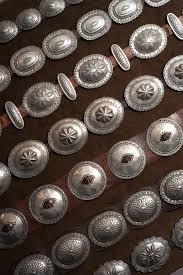
Introduced by the Spaniards & Mexicans around the middle of the 19th Century, Navajo silversmiths obtained metal by melting down American silver dollars or Mexican pesos.
It’s believed that Navajos began working with turquoise after returning from Fort Sumner, New Mexico in 1868. Aside from its ornamental value, turquoise is especially important to the Navajo people because of the ceremonial significance.
For Directions, information about hours, admission fees and programs at the various sites on the Navajo Nation, go to: https://discovernavajo.com/